

August 27, 2026
Framed Canvas Wrap in Los Angeles: Floater Frames, File Sizes and Where to Hang It
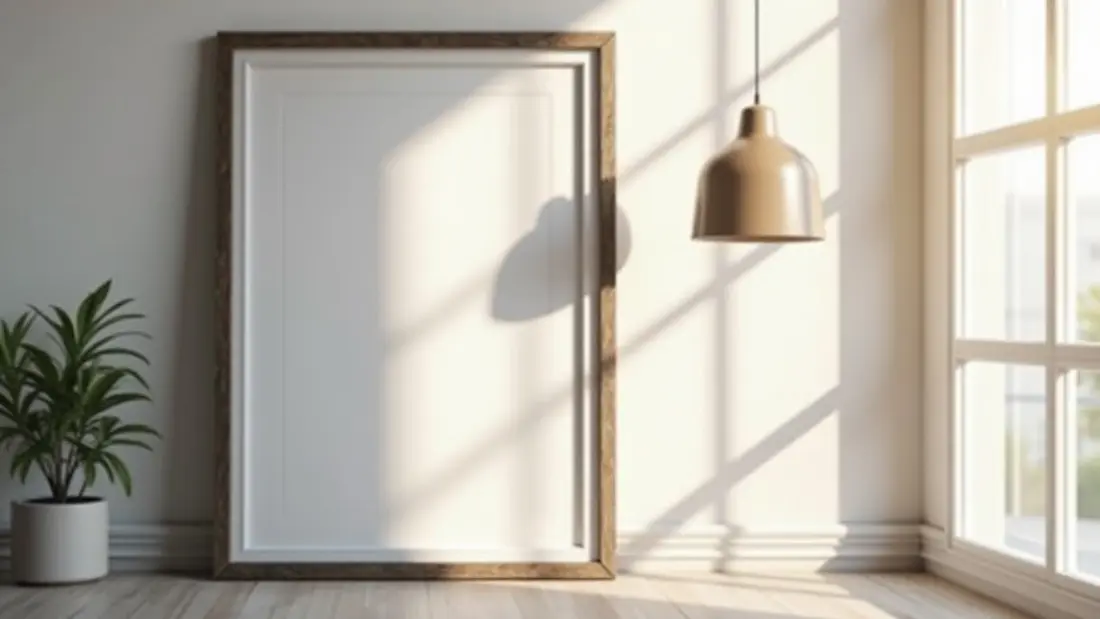
People walk into the shop asking for two different things with the same three words. Some want a photograph on canvas with a thin wooden frame around the outside — the finished, on-the-wall look you see in a hotel lobby. Others want a stretched canvas with nothing around it and are using "framed" to mean "already on stretcher bars, ready to hang, not a rolled tube." Both are real products and they cost different money, so the first thing we ask is whether you want a visible frame or just a finished edge. Here is the rest of what actually decides whether the piece looks right when it goes up.
What the frame does that a bare wrap does not
A canvas wrap is printed canvas stretched over a wooden stretcher frame and stapled on the back. Left alone, that is a gallery wrap: the image continues around the sides, the corners are folded, and the edge you see from an angle is your own photograph curving away. It is clean and it is the cheaper of the two.
A framed canvas wrap adds a frame around the outside of that stretched piece — usually a floater frame, which is the type built for canvas. A floater frame does not overlap the front of the image at all. The canvas sits inside it with a small gap, typically a quarter inch or so on each side, so the art appears to hover in the frame rather than being clamped by it. Nothing is covered, nothing is matted, no glass sits in front of it. Our framed canvas wraps start at $46.63, and what you are paying for over a bare wrap is that frame, the finished edge and the fact that a floater frame stiffens the whole assembly and keeps the corners honest on larger pieces.
The practical reason to spend it: a bare gallery wrap on a white wall in a bright room reads as unfinished, because there is no line telling your eye where the image stops. A floater frame draws that line in half an inch of dark wood and the same print suddenly looks deliberate. On a busy or patterned wall the effect is stronger still.
Your file decides your maximum size, not your budget
This is where most orders get downgraded, and it is worth checking before you fall in love with a 40-inch piece. Canvas is forgiving compared with paper — the weave scatters detail, and people stand further back from a large canvas than they do from a print in a binder — so we are comfortable at roughly 100 to 150 pixels per inch at final size. A 3000-pixel-wide file therefore gets you somewhere between 20 and 30 inches wide before the softness starts to show.
A few specific traps. Photos pulled off Instagram or a text message have already been recompressed and are often under 1200 pixels on the long edge, which is a 10-inch piece at best. Screenshots of photos are worse. A modern phone shooting at full resolution is genuinely fine up to 30 inches or more, so send the original file out of the camera roll, not the copy that has been through three apps. And upscaling software can bail you out one size step; it cannot invent detail that was never captured, and on a face it tends to produce a plastic, over-smoothed skin that is more obvious on canvas than on screen.
Aspect ratio is the other one. A phone photo is 4:3, most cameras are 3:2, and neither fits a 16x20 or a square. Something has to be cropped. Tell us what must stay in the frame — a head, a horizon, a logo — or we will crop centred and you may lose the top of someone's hair.
Bleed: the part of your image that disappears
On a wrapped canvas, roughly an inch and a half of image on every side goes around onto the sides of the stretcher bars, and a little more gets pulled around the corner fold. That is image you will not see from the front. If your subject is tight to the edge of the frame — a group photo where someone's shoulder touches the border, artwork with a signature in the corner, a logo lockup that already sits at the margin — plan for it.
Three ways to handle it. Extend the background in the file so there is real image to sacrifice, which is the best-looking option when the background is sky, water or plain wall. Mirror wrap, where we reflect the outer band of the image around the sides, which nobody notices on a landscape and looks strange on architecture. Or a solid-colour wrap, where the sides are one flat colour pulled from the image. With a floater frame the sides are largely hidden anyway, so solid colour is a perfectly reasonable choice on framed pieces and a poor one on a bare gallery wrap.
Canvas, coating and Los Angeles light
We print on poly-cotton canvas, which holds colour better and stretches more predictably than pure cotton, and the print gets a protective coating. The choice worth making is matte versus satin. Satin holds a little more contrast and depth in dark areas. Matte kills reflections. In a room with a big west-facing window — which in the Valley means most living rooms, most afternoons — matte is usually the right answer, because a satin coating will mirror that window straight back at you for three hours a day.
The light matters after the piece is up, too. Direct sun on any inkjet print will pull the colour out of it over time, canvas included. Do not hang a canvas on the wall that catches full afternoon sun, and do not hang one directly above a working fireplace, where heat and soot both work against you. Interior walls, walls perpendicular to the window, and hallways are all fine. Canvas is also the wrong choice for a bathroom with a real shower in it — repeated humidity cycles loosen the stretch and the surface goes slack.
Sizing and hanging it so it looks intentional
Two rules cover most rooms. Over furniture, the piece should span about two-thirds of the width of the sofa, bed or console beneath it, with roughly 6 to 10 inches of wall between the furniture and the bottom of the frame. On an empty wall, hang it so the centre of the image sits around 57 to 60 inches off the floor — gallery height, and the reason a room full of art at different heights feels wrong.
Framed canvas is light. A 24x36 piece weighs a few pounds, so a single drywall anchor rated for 20 pounds is more than enough, and two anchors spaced apart will keep it from rotating every time someone closes the door. In Los Angeles there is one extra consideration people forget: things on walls move in an earthquake. For anything above a bed, a desk or a reception seating area, use two hooks and add a small dab of museum putty at the lower corners.
Canvas in a commercial space
Restaurants, salons, clinics and offices order framed canvas for the same reason homes do — it absorbs sound slightly, it does not glare like glass, and it does not look like signage. That last part is also its limitation. A canvas of your storefront hanging behind the counter is decor. It is not going to be read as your business name by anyone on the sidewalk, and it does not belong on any exterior wall.
If what you actually need is identification, that is a different product. Lobby and counter identification usually wants acrylic business signs from $46.76, mounted off the wall on standoffs so the logo has visible depth. A photographic image that needs to survive being wiped down, or to sit somewhere too bright for canvas, belongs on acrylic printing from $90, where the print is behind the panel and the colour holds up. A message that changes with the day goes outside on an A-frame sidewalk sign from $94.99. And if you are working out what goes on the building versus what goes inside it, that planning sits with our signage and front signs and outdoor advertising and signs work.
What to send us
The highest-resolution original file you have, in JPEG, TIFF or PDF, sRGB if you know what that means and untouched if you do not. Tell us the finished size, whether you want the frame or a bare gallery wrap, matte or satin, and how you want the edges handled. If the image has been printed before and you liked how it came out, say so — matching a known result is easier than guessing.
Angels Print prints and stretches canvas, builds framed canvas wraps, and produces acrylic panels and signage at our shop at 8511 Lankershim Blvd in Sun Valley, for homes, studios, restaurants and offices across the San Fernando Valley and greater Los Angeles. If your file is ready, pick your size and order online. If you are not sure whether your photo will hold up at 36 inches, whether a floater frame suits the image, or which wall in the room it should go on, call us at (818) 806-9006 or bring the file into the shop and we will look at it with you before you pay for it.