

August 22, 2026
Corrugated Mailer Boxes in Los Angeles: Flutes, Die Lines and What a Run Actually Costs
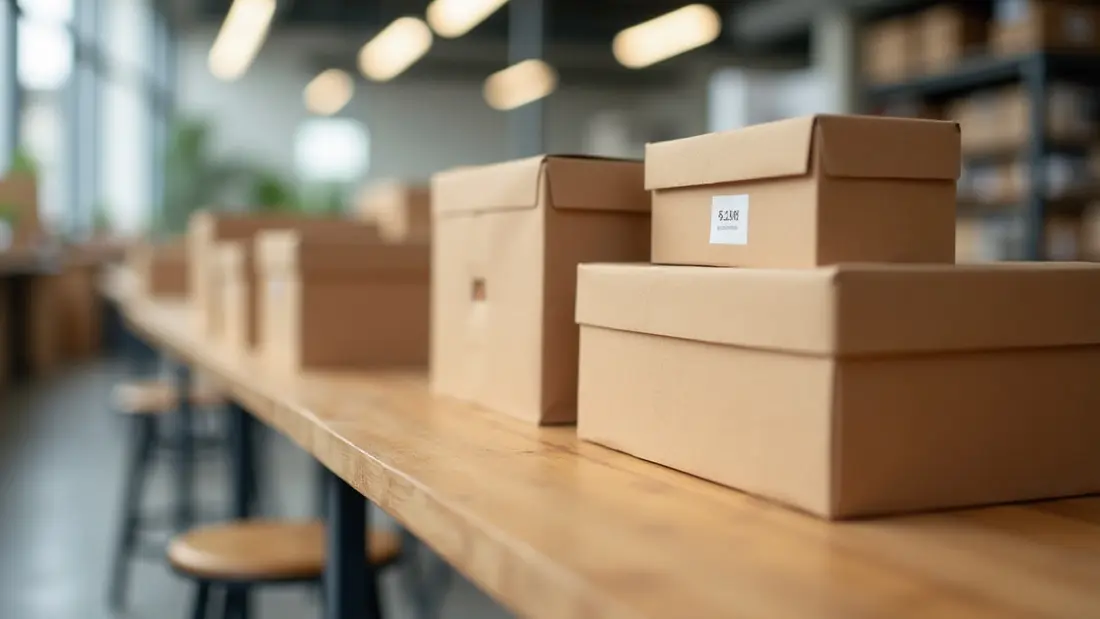
Almost everyone who calls us about mailer boxes has already bought the wrong thing once. Usually it was a stock white box off a marketplace, ordered by outside dimensions, that turned out to be a quarter inch too shallow for the product once the tissue and the insert went in. Or it was a printed box that looked right on screen and arrived with a kraft-brown cast under the ink because nobody said the liner needed to be white. Corrugated is an unforgiving material to specify from a picture, and most of the decisions that matter — flute grade, liner color, box style, interior dimensions — are invisible in the mockup. This is the order in which we work through them at the shop.
Mailer, product box, shipping box: three different jobs
A mailer box is the one that ships. It is a single piece of corrugated with side wings and a hinged lid that tucks into the front, it needs no tape when it is packed properly, and it is designed to survive a carrier network and then be the first thing your customer touches. Our corrugated mailer boxes start at $298.10, which is 25 boxes at $11.92 each on the default run — that per-piece number moves down sharply with quantity, which we will come back to, because it is the single biggest lever on this product.
A product box is retail packaging. It sits on a shelf or inside a shipper, it holds the item in presentation form, and it does not have to take a beating from a conveyor belt. Corrugated product boxes run from $272.56 — 25 pieces at $10.90 each — and the reason they cost slightly less than the mailer at the same count is structural, not cosmetic: less material in the blank, simpler closure, lighter board.
A shipping box is the plain outer carton. It exists to protect and it is priced accordingly: corrugated shipping boxes from $169.51, 25 at $6.78 each. Plenty of brands we work with in the Valley use two of the three — a printed mailer for direct-to-customer orders, and unbranded shipping boxes for wholesale pallets going to a stockist who is going to open them in a back room anyway. Paying for print on a box nobody photographs is money you could spend on the box that shows up on Instagram.
Flutes, and the number that actually matters
Corrugated is a fluted medium glued between two liners, and the flute size sets thickness and behavior. E-flute is about 1/16 inch and is the standard for mailer boxes: thin enough to fold crisply and print cleanly, stiff enough to protect apparel, cosmetics, coffee, small electronics. B-flute is about 1/8 inch, noticeably tougher, and the right call for anything with weight or glass in it. C-flute at roughly 3/16 inch is shipping-carton territory — strong, bulky, and too coarse for fine print because the flute pattern telegraphs through the liner as visible ridging. F-flute is thinner than E and used for small rigid-feeling retail boxes where the fold has to be very tight.
The specification people skip is edge crush test. ECT measures how much force the board takes on its edge before it collapses, which is what happens in a stack on a pallet or in the bottom of a delivery van. 32 ECT is the common single-wall grade and it is fine for most mailers under about ten pounds. Going heavier, or stacking your own boxes six high in a warehouse, means moving up in ECT or to a double-wall board, and that changes the price per box more than any print decision will. Tell us the packed weight and the stack height, not just the dimensions.
Interior dimensions, always
Corrugated boxes are specified length × width × depth, interior. This is not a formality. The board is a real thickness — E-flute adds roughly 1/16 inch per wall, B-flute an eighth — so a box built to your product's exact outside measurements will not close over it once the material is accounted for. Measure the product, add the void fill or insert you plan to use, add a little for the tissue if there is tissue, and give us that number as the inside.
The other sizing pressure is dimensional weight. Carriers bill the greater of actual weight and volumetric weight, so an over-large mailer for a light product is a shipping surcharge you pay on every single order for the life of the box. Shaving an inch of depth off a mailer that ships a thousand times a year is usually worth more than any per-box discount you can negotiate. Depth is also where the tuck flap lives, and a mailer that is too deep for its contents lets the product slide and the lid bow — it arrives looking tired even when nothing is damaged.
Kraft or white, and how ink behaves on each
Natural kraft is the brown liner. It is cheaper, it reads as unbleached and recycled, and it is genuinely good-looking with one or two colors of ink and no coverage. What it will not do is give you accurate color: printing on kraft is like painting on a brown wall — every ink shifts warm and darker, light colors barely register, and there is no white ink unless it is added as a separate layer. If your brand color is a pale mint, it will not survive kraft.
White liner — either bleached or a white-top on a kraft body — is what you want for photographic or full-coverage artwork and for accurate brand color. It costs more per sheet and shows scuffing more readily, which matters on a box that travels. Interior print is a separate decision from exterior print and a separate cost; an unprinted kraft inside with a printed outside is a common and sensible split.
On coverage: heavy solid ink across an entire mailer looks great in renders and is the hardest thing to keep looking great in practice. Every crease on a box with a dark solid shows a fine light line where the board has been scored, and scuffs from the conveyor read as pale streaks. Designs built around generous unprinted areas with strong marks in them ship better than edge-to-edge black.
The die line comes first
Nothing gets printed until there is a die line — the flat pattern of cuts, creases and glue tabs for the exact box you are making. Artwork goes onto that template, not the other way around, and every one of our box products has one for the size you configure. Build the file at 100%, in CMYK, with fonts outlined, and keep critical elements — logo, key copy — a quarter inch clear of every fold and cut. Corrugated die cutting shifts a little; a design that assumes a perfect register across a crease will show it.
Remember that the panels are not all upright. On a standard mailer the back panel, the lid and the front tuck all read in different orientations when the box is flat and again when it is folded. Mark your die line with which panel is which and check the rotation before approving. Reversed lid artwork is the single most common proofing error we catch.
Small pieces that finish the box
If you run a café, a roastery or a subscription, the mailer is rarely the only printed piece. Coffee sleeves start at $172.88 for a default run of 100 at $1.73 each, and they are the cheapest brand impression in the whole system — they get held for twenty minutes at eye level. Matching the sleeve, the mailer and any product box on typeface, ink color and paper tone is what makes a small brand read as an established one. Planning that set as a system rather than as three separate orders is what our custom packaging work covers, and the broader structural side — inserts, sizes, board grades across a product line — sits under custom packaging and boxes.
What moves the price
Four things, in order of impact. Quantity is first and it is not close: corrugated has a real setup cost — die, plates, makeready — spread across the run, which is why 25 boxes carry a per-piece figure that looks high next to what you would pay at a thousand. If your forecast supports it, one larger run beats four small ones by a wide margin. Second is board: flute grade, ECT and single versus double wall. Third is liner and ink coverage — white liner and full-bleed cost more than one color on kraft. Fourth is finishing: matte or gloss lamination, spot coating, custom inserts.
The saving we suggest most often is dropping interior print and putting the money into board grade instead. A sturdier box that arrives square does more for repeat orders than a printed message on the inside of the lid.
Angels Print prints and die-cuts custom mailer boxes, product boxes, shipping cartons and coffee sleeves at our shop at 8511 Lankershim Blvd in Sun Valley, for e-commerce brands, roasters, cosmetics lines and makers across the San Fernando Valley and greater Los Angeles. If your dimensions and artwork are settled, configure the size, board and quantity and order online. If you are still deciding between E and B flute, kraft and white, or you want to put the actual product inside a sample before committing to a run, call us at (818) 806-9006 or bring it by the shop and we will fold one up around it.