

August 23, 2026
Custom Subscription Boxes in Los Angeles: Sizing, Reorder Cadence and What the Carrier Actually Charges You For
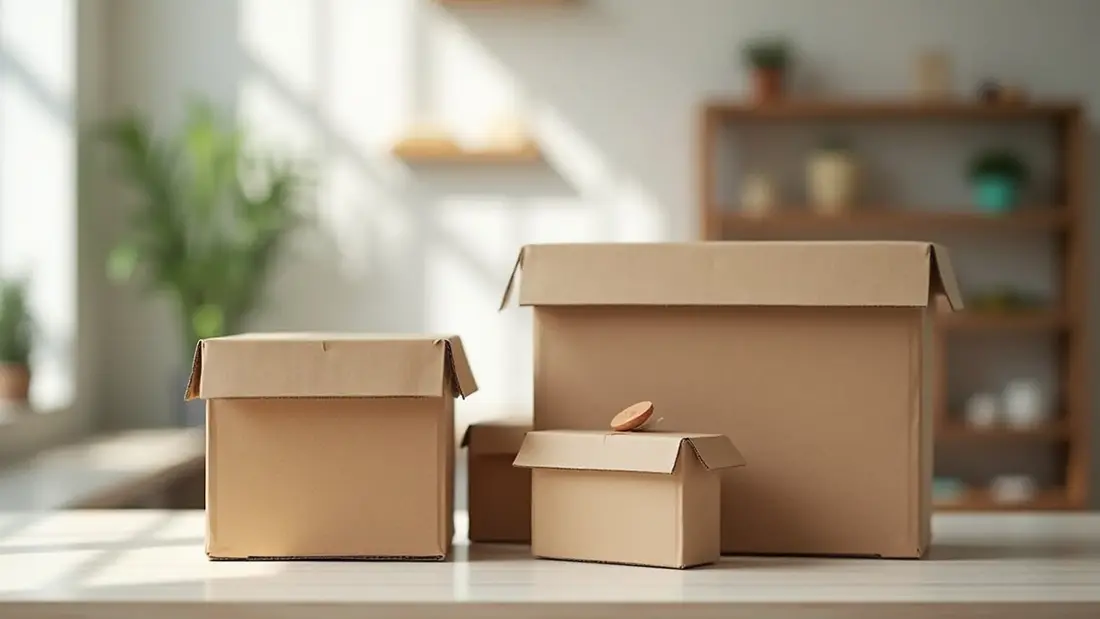
Almost every subscription box conversation we have starts in the wrong place. Someone shows us a beautiful box they saw on Instagram, we ask what goes inside it, and the answer is different every month. That is the whole problem in one sentence. A retail box holds one product forever. An e-commerce mailer holds whatever that order happened to be. A subscription box has to hold twelve different things over twelve months, ship at the same rate every time, survive the same handling, and still feel like the same brand when the customer opens it for the ninth time. The printing is the easy part. Getting the box to do all three of those jobs at once is where the decisions live.
Our custom subscription boxes start at $298.10 for a run of 25, which is $11.92 apiece. That quantity is deliberately low, and we will come back to why — for a product that reorders on a schedule, the right first run is almost never the cheapest per-unit run.
A subscription box is not a mailer with nicer artwork
Structurally they are different animals. A corrugated mailer box — same $298.10 for 25, $11.92 each — is a one-piece die-cut with a tuck front and side wings. It folds flat, assembles in about four seconds, and it is built to be opened once and recycled. That is exactly right for order fulfillment. It is only half right for a subscription, because subscribers keep the box. They stack them, they reuse them, they photograph them, and a tuck flap that has been opened three times stops closing.
The other direction is a corrugated product box at $272.56 for 25, or $10.90 each — a regular slotted carton or a two-piece lid-and-base, closer to a retail package. It looks better on a shelf and it takes a full-bleed printed lid beautifully. It also does not ship on its own without tape, and taping over a printed lid is an ugly compromise nobody plans for and everybody discovers in month one.
Most subscription programs land on a mailer body with a heavier board and a locking front tab, or on a two-piece box that goes inside a plain outer. Which one is right depends on whether the box is the unboxing moment or the box inside the unboxing moment. Tell us which, and the structure follows.
Size to the smallest month, not the biggest
The instinct is to spec a box that fits the most generous month, then pad the light months with void fill. It is the most expensive mistake available in this category, and it repeats every single month for the life of the program.
Carriers bill by the greater of actual weight and dimensional weight, and dimensional weight is length × width × height in inches divided by 139 for domestic ground. A 12×9×4 box is 432 cubic inches, which bills as roughly 3.1 pounds no matter what is inside it. Drop the height to 3 inches and you are at 324 cubic inches — about 2.3 pounds. That difference is small on one shipment and it is the difference between a program that works and one that does not when you multiply it by a subscriber count and twelve months.
So we size to the median month and solve the outliers differently: a slimmer insert for light months, a second small box for the one heavy month a year. If the contents genuinely vary that much, two box sizes printed at once is usually cheaper over a year than one oversized box shipped twelve times.
Measure your actual products before we cut a dieline. Not the spec sheet — the item, in your hand, with its own packaging on. Glass jars, candles and anything with a lid are reliably a quarter inch taller than people remember, and a quarter inch is what decides whether the flaps close flat or dome.
What to print, and what to leave alone
Corrugated does not hold detail the way a business card does. Flexo and litho-lam both have limits, the flute texture shows through solids, and large flat areas of dark ink on kraft-facing board will show scuffing from the belt in transit whether we print it or anyone else does. That is physics, not workmanship.
The designs that hold up are the ones that use the material honestly: unprinted or single-color kraft outside with a strong mark, or a bold flat-color exterior with type large enough that a scuff reads as texture instead of damage. Fine gradients across the full lid and heavy solid black are the two things we will push back on. If the box must be photographic and rich, that is a case for printing the interior and keeping the exterior simple — see below.
Also: do not print the ship date, the month, the volume number or a promo code on the outside of the box. Everything printed on corrugated is committed for the whole run. Anything time-bound belongs on a card, a sleeve or a sticker that costs a fraction as much to reprint.
The inside does the emotional work
Interior print is the highest-return decision in a subscription box and the one people skip. The exterior is seen by a delivery driver for ninety seconds. The interior is what the subscriber is looking at when they open it, and it is the frame of every photo they post.
A printed inside face — a pattern, a message, a map, a thank-you set in type large enough to read at arm's length — costs less than most people expect, because it is the same press pass on a sheet that is already going through. It also protects your exterior budget: a plain kraft outside with a fully printed inside reads as more considered than the reverse, and it scuffs less on the way.
Cadence, and why 25 is a real quantity
Per-piece cost falls with quantity, and it is tempting to order a year of boxes on day one. For a first program, do not. The things that change after the first three shipments are the things printed on the box: the size is wrong by half an inch, the tab tears, the logo placement fights the shipping label, the address block sits where the tape goes. A 25-piece run at $11.92 each is expensive per box and cheap as tuition.
Once the structure is settled — and it usually settles by month three — the calculus flips completely. Then you want the longest run your storage and your cash allow, because every reorder is a new setup, and setup is a fixed cost spread across whatever quantity you put under it. The pattern that works: small run to prove the box, then a large run of the now-frozen exterior, with the dated and seasonal content moved onto short-run inserts you reprint monthly.
The small printed pieces that ride along
The insert card, the sticker sheet, the sleeve — these are where a subscription program gets its monthly variation without touching the box. Coffee and tea programs in particular get a lot out of coffee sleeves at $172.88 for 100, or $1.73 each: they work as an actual sleeve on a cup, as a band around a bag, and as a wrap holding a small bundle together inside the box. They are cheap enough to print a new design every month while the box stays fixed for a year.
Planning that split — what is permanent, what is seasonal, what is per-subscriber — is the part of custom packaging work that saves the most money, and the structural side, dielines and box styles, sits under packaging and boxes.
Files, dielines and the two errors we see most
Work on our dieline, at 100% scale, in vector — PDF, AI or EPS — with text converted to outlines and colors specified in CMYK or by Pantone reference. Keep critical artwork at least a quarter inch off every fold and score. Corrugated cutting and folding have real tolerance, and a logo that sits a sixteenth of an inch from a score will land on the score on some pieces of the run.
The two errors that cost the most time: artwork built to the flat dimensions instead of the dieline, so the panels do not match the folds; and interior artwork supplied without indicating which way is up, which produces a beautiful printed inside that reads sideways when the box is open. Label your panels. It takes a minute and it prevents a reprint.
Angels Print prints subscription boxes, mailer boxes, product boxes and the small printed pieces that go inside them at our shop at 8511 Lankershim Blvd in Sun Valley, for brands shipping out of the San Fernando Valley and across Los Angeles. If your dimensions and artwork are settled, configure size, board and quantity and order online. If you are still deciding between a mailer body and a two-piece box, or working out whether one box size or two will serve a program with variable contents, call us at (818) 806-9006 or bring a month's contents to the shop and we will build the box around what actually has to fit in it.