

August 20, 2026
Updated
Acrylic Business Signs in Los Angeles: What to Specify Before You Order
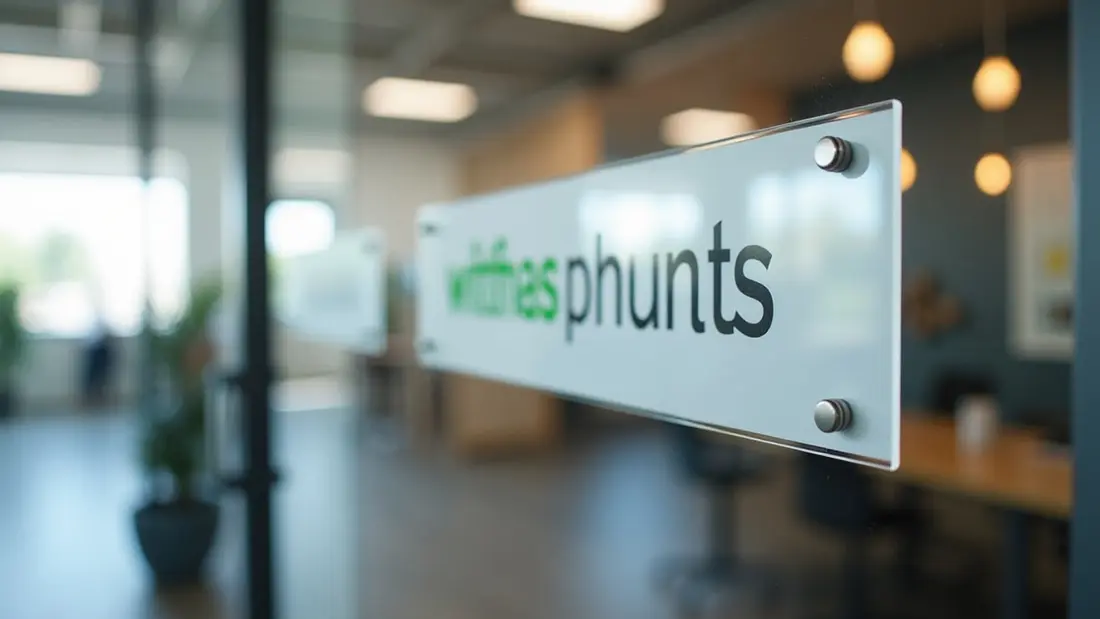
When someone calls the shop about an acrylic sign, the picture in their head is usually the same one: a clean panel of clear plastic floating a half inch off a wall with a logo on it. What varies enormously is where it is going and what it has to do. A reception panel in an air-conditioned suite in Sherman Oaks, a suite-number plate in a shared corridor, a printed photographic panel behind a bar, and a sign that gets carried onto a Lankershim sidewalk every morning are four products with different substrates, different printing methods and a price spread of more than double. Getting them mixed up is how a beautiful indoor panel ends up yellowing on a west-facing exterior wall in two summers. This is the sorting we do before anything gets cut.
The four things people call an acrylic sign
The first is the lobby or reception sign: a rectangular acrylic panel, usually mounted on metal standoffs, carrying a logo and sometimes a tagline. That is what our acrylic business signs from $46.76 cover, and it is the most common request we get from offices, clinics, salons and studios across the Valley. The second is the smaller functional plate — suite numbers, department names, conference room labels, hours on a door — where the standoff hardware is doing as much visual work as the graphic. Those are standoff acrylic wall signs from $37.5, and businesses usually order them in sets rather than singly.
The third is acrylic as a print medium rather than as a sign: a full-bleed image, artwork, a menu board, a photographic panel. Acrylic printing from $90 is priced differently because the whole face is covered in ink instead of a logo sitting in white space, and because that kind of panel is usually larger. The fourth is not a wall sign at all — it is the A-frame sidewalk sign from $94.99, which people ask about in the same breath because they want the storefront to read as one system. It should, but it is built from entirely different materials, and we will come back to why.
Cast or extruded, and how thick
Acrylic comes in two forms and they are not interchangeable. Cast acrylic is poured between glass, which gives it better optical clarity, cleaner polished edges and much better behavior under a laser — it cuts with a flame-polished edge instead of a hazy one. Extruded acrylic is pushed through a die, costs less, comes in tighter thickness tolerances and is fine as a printed substrate where the edge is not the point. For a sign whose edge is visible and lit from the side, which is most standoff work, cast is the material that makes the piece look expensive.
Thickness is the specification people most often under-call. Quarter inch (6 mm) is the default for a lobby panel up to roughly two feet across; it is rigid, it holds a crisp edge, and it looks substantial in profile. Eighth inch (3 mm) is fine for a small suite plate or a plaque under about eight inches but visibly flexes at anything larger, and it will bow slowly over a year on a warm wall. Above three feet you either move to three-eighths or half inch or you add fixing points, because acrylic is not stiff the way aluminum is — it sags under its own weight and the sag is permanent.
Printing on the front, printing on the back
Direct printing puts UV-cured ink on the face of the panel. It is straightforward, it works on any thickness, and it is what you want when the sign is not clear — a white or black or colored acrylic where the ink needs to sit on the surface. The downside is that the ink is exposed: it can be scratched, and on a panel that gets wiped down daily it eventually shows wear.
Second-surface printing is the technique that makes clear acrylic look the way people expect. The graphic is printed in reverse on the back of the panel, then backed with white ink, so you read it through the acrylic itself. The thickness of the material sits between your eye and the ink, which adds depth, the colors read glossier and deeper, and the ink is physically protected by the sheet — nothing on the readable face can be scuffed. It is the right default for reception signs, and it is why a well-made acrylic panel still looks new after years of being cleaned.
One consequence worth knowing: a clear panel with second-surface printing takes on whatever is behind it. Mounted on a dark wall, unbacked white ink reads grey. If the wall is painted a strong color or is exposed brick, either specify a solid white backer layer or accept that the wall becomes part of the design. We would rather ask about the wall color than guess.
Standoffs, and what your wall is made of
Standoffs are the barrel-and-cap hardware that holds the panel off the wall. The gap creates a shadow line, which is most of the effect, and it also lets the panel sit flat over a wall that is not flat. Sizes run from about half an inch to an inch of projection; a longer barrel throws a stronger shadow and looks better under downlighting, a shorter one looks tighter on a small plate.
Mounting depends on the panel, the wall and the selected hardware. The standoff acrylic sign lets you choose a hole layout and a standoff option; holes do not by themselves mean hardware is included. The default standoff choice is No. Confirm the supplied pieces and the anchor requirements for the actual wall before installation. A screen selection is not a drilling template, and a generic wall guide cannot establish a safe anchor for a particular panel or surface.
Outdoors in Los Angeles
Acrylic itself handles UV well — it is the material skylights are made from, and it yellows far less than polycarbonate. What fails outdoors is usually everything else: surface-printed ink chalking on a south-facing wall, adhesive-mounted panels releasing in Valley summer heat, and standoff caps that are aluminum on the outside and steel on the inside starting to weep rust down a stucco wall within a season. If the sign is going outside, that means second-surface printing, stainless hardware, and a rear-ventilated mount rather than tape.
Full exterior building identification is a different scope than a lobby panel, and it is worth planning as a system — face-lit letters, a panel sign, the window graphics and whatever is on the sidewalk all read together from a car. That planning is what our signage and front signs work covers, and the campaign-level pieces — banners, monument and roadside visibility, temporary promotion — sit under outdoor advertising. Also worth saying plainly: most permanent wall and building signs in the City and County of Los Angeles require a sign permit, and landlords in strip centers along Lankershim and San Fernando Road commonly have their own tenant sign criteria on top of that. Check both before you approve artwork, not after.
Sizing and legibility
A useful rule for reading distance is roughly one inch of capital letter height per ten feet. A reception sign read from across a small lobby at fifteen feet needs about an inch and a half of cap height for the company name — which usually makes the panel eighteen to twenty-four inches wide once the logo and the margins are accounted for. Suite plates read at three or four feet and can drop to half an inch. Sidewalk signs are read at twenty to thirty feet by someone walking, so the headline wants two to three inches minimum and three lines of text at most.
Leave real margin. Artwork crowded to the panel edge looks like a mistake on a piece of material whose edge is polished and deliberately visible. An inch of clear space around the graphic on a two-foot panel is not wasted — it is what makes the acrylic read as a frame.
The sidewalk piece, and why it is not acrylic
People ask us to make the A-frame in acrylic to match the lobby sign. We talk them out of it. A sidewalk sign gets dropped, folded, dragged over concrete and knocked flat by wind, and acrylic cracks rather than dents — a hairline crack from one fall propagates across the panel and the piece is finished. The A-frame is built to take that abuse, and its inserts are meant to be swapped when the message changes, which is the other reason it should not be a permanent-material sign. Match the two on typography and color instead of on substrate: same typeface, same palette, and the storefront reads as one identity even though one piece is a rigid panel and the other is a working tool.
Files, and what moves the price
Prepare artwork at the intended finished size and check image resolution at that size. Keep text and logos clear of the approved hole locations. Choose the panel material, print side, hole layout and standoff option on the product page, then confirm the required artwork and white-ink preparation for that combination. Do not drill from a preview or assume a corner inset: the final hole diameter, offsets and mounting drawing need to match the actual panel and hardware.
Price follows four things: panel area, material thickness, how much of the face is covered in ink, and hardware count. Going from quarter inch to half inch on a large panel is a real jump because the material cost roughly doubles. Covering the full face in a photographic image costs more than a logo on clear. A set of six suite plates ordered together is one setup; the same six ordered one at a time over the year is six. If the budget is tight, the cheapest honest saving is a smaller panel with the same thickness — not a thinner panel at the same size, which is where signs start to bow.
Angels Print makes acrylic business signs, standoff panels, printed acrylic and sidewalk signs at our shop at 8511 Lankershim Blvd in Sun Valley, for offices, clinics, studios and storefronts across the San Fernando Valley and greater Los Angeles. If your artwork is ready, configure the size, thickness and hardware and order online. If you are still deciding between clear and white, quarter inch and half inch, or whether the wall you have will take standoffs at all, call us at (818) 806-9006 or bring a photo of the wall by the shop and we will show you the materials side by side before you commit.