

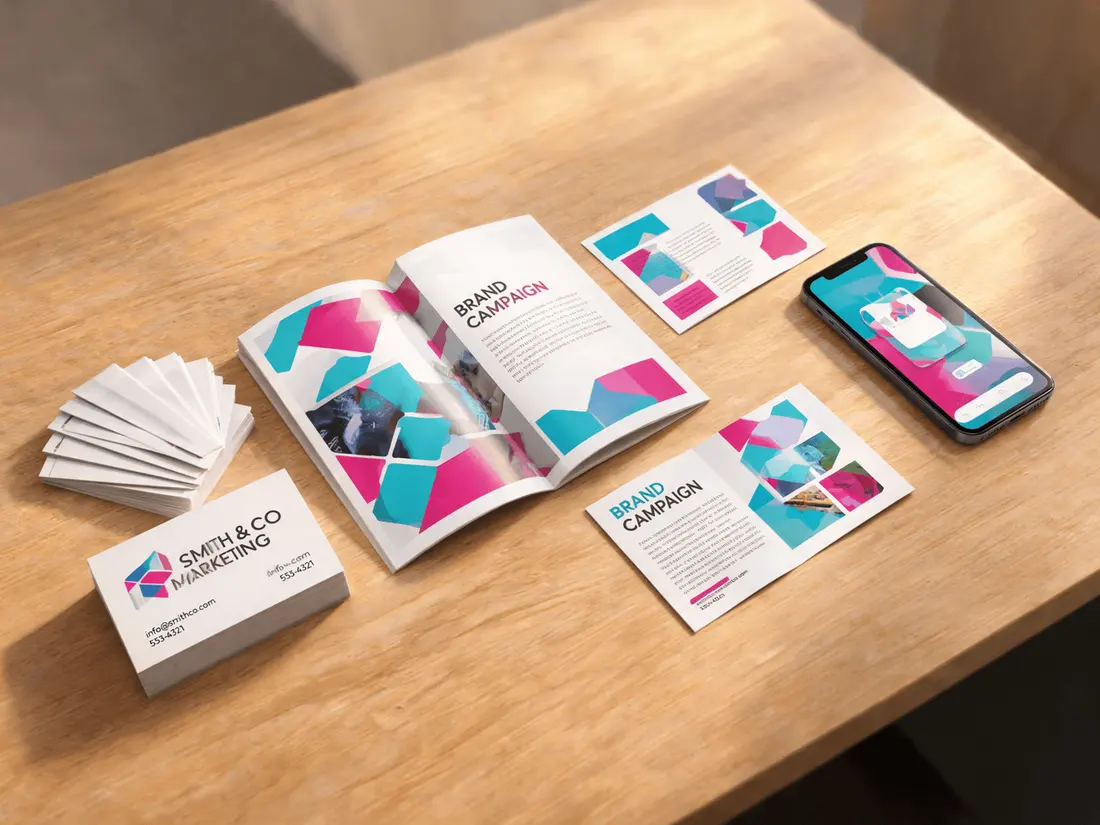
Print can put an offer in front of someone at a useful moment: a card after a conversation, a postcard inside a completed order, or a banner at an event entrance. The next step often happens online. Plan that connection before choosing the paper or placing the print order, so the customer knows what to do and you can tell whether the campaign helped.
Give each printed piece one job
Choose one audience, one offer and one action. For example, a service business could give a follow-up card to people who asked about a specific service, with a short explanation and a link to request an estimate. That is a campaign idea, not a promise of a particular response rate. A general list of everything the company sells gives the reader a harder decision and makes the result harder to measure.
Match the format to the handoff. Business cards suit personal contact details. Postcards give an offer, image and short explanation more room. A vinyl banner can identify the event or promotion from a distance; detailed instructions belong on a smaller piece that people can stop and read.
Send people to the page the print promises
Use a landing page that repeats the same offer and makes the next step obvious. If the postcard invites someone to request a packaging estimate, send them to that service or enquiry page, not a homepage where they must search again. Check the page on a phone and complete the form yourself before printing. Keep a readable web address beside a QR code so the code is not the only way to respond.
Create a separate campaign link for each distribution method. For example, name one source for an order insert and another for an event handout, with medium set to print and a descriptive campaign name in your analytics tags. Keep names consistent and avoid putting customer names or other personal information in those links. If a redirect sits behind the QR code, make sure you control it and can keep it working for the useful life of the print.
Test the finished size, not just the artwork on screen
Print a sample at its actual size and scan it with more than one phone. Check the destination, contrast, surrounding clear space and whether a fold or cut crosses the code. Try it from the distance at which someone will use the piece. A code that works on a postcard in your hand may be impractical on a banner viewed across a room.
Proof the plain-text address, offer, expiry date and contact details separately. Keep the artwork and landing page together in your campaign records so a later reorder does not revive an expired offer. The design service can help prepare the layout; the offer and destination still need your approval.
Measure responses that matter to the business
Record how many pieces were distributed, the print and distribution costs, campaign visits, qualified enquiries and completed orders. A scan is a response, not a sale, and some customers will type the address or contact you later without using the tracked link. Use the figures as a practical comparison between campaigns rather than a complete account of every person influenced by the print.
Calculate cost per qualified enquiry by dividing the campaign's total cost by its qualified enquiries. If there were no qualified enquiries, record that result instead of reporting a cost per enquiry. Compare the value of completed orders with the costs you actually incurred before deciding on a larger run.
Start with a run you can distribute during the offer period. Keep the audience and distribution method similar while testing one change, such as the headline or offer. Configure your postcards or other print once the destination and measurement plan are ready, then use the results to decide what to print next.