

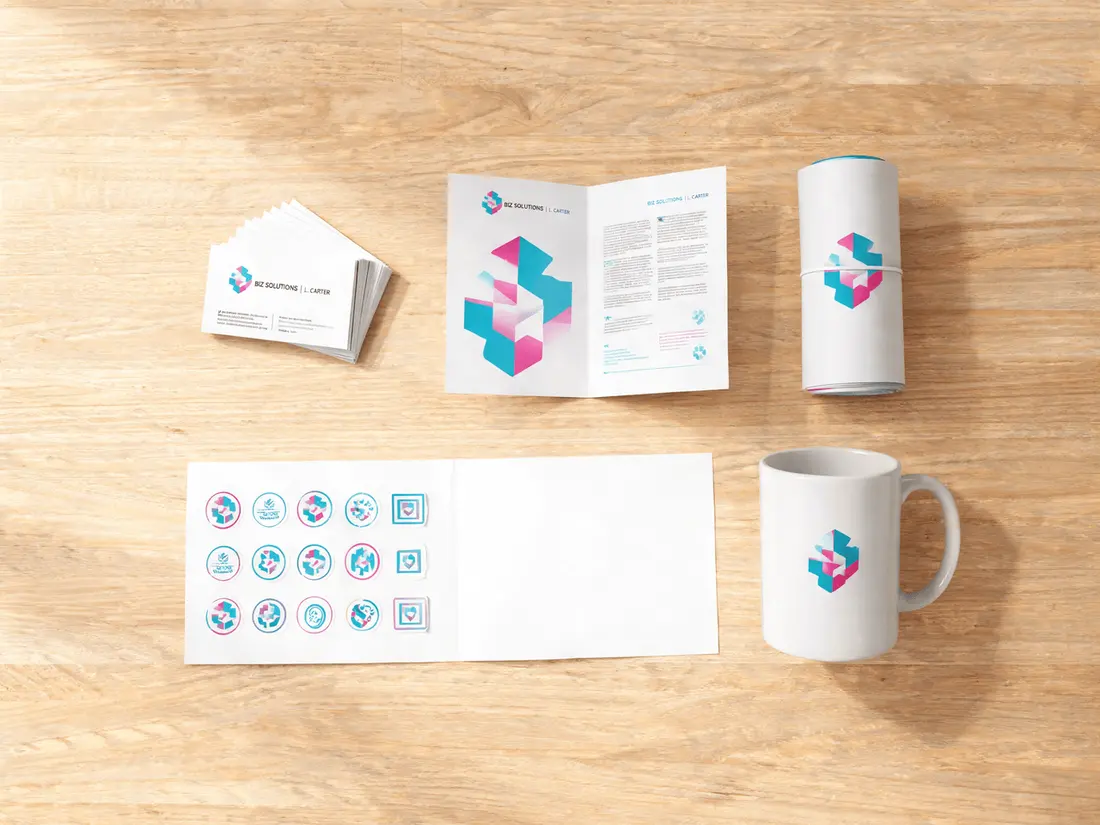
A useful print order starts with a job to do. Are you helping someone contact you, explaining an offer, identifying a location or labeling a product? You do not need all five formats below. Choose the one that removes a specific obstacle for your customer, then add another only when it has a clear role.
1. Business cards for a conversation worth following up
Choose classic business cards when you meet customers in person and need a compact way to share your name, role and preferred contact method. A contractor, consultant or event exhibitor can use the back for a short service summary or a link to relevant work. Put essential details ahead of decorative finishes.
Check the design at actual size. Small pale type that looks elegant on a large screen can be difficult to read in a hand. If you plan to write appointment times or notes on the card, compare uncoated business cards and test the pen you intend to use. Order for the contacts you expect to make before names, staff or details change.
2. Handouts that explain the next step
Use a postcard for one offer or an appointment reminder. Choose the brochure printing service when the reader needs a sequence, service comparison or several sections to make a decision. More space is useful only when the information earns it: a short offer does not need a folded brochure.
For example, a service company could hand a prospect a card summarizing what an estimate includes and how to request one. If the piece folds, make a paper mock-up and read it in opening order. Confirm the final size, fold positions, contact details and destination of any QR code before approving the proof.
3. Banners and displays for a place people need to find
A vinyl banner suits a temporary message where you have an appropriate place to attach it. A retractable banner includes a stand for an indoor check-in area or presentation. For an exposed fence, discuss mesh banners and the mounting conditions instead of selecting material by price alone.
Measure the available space and decide where the reader will stand. Give the banner a short headline and one supporting detail; keep terms, menus and long service lists on a handout. Confirm whether the order includes the stand or only the printed graphic, and match grommets or pole pockets to the support before ordering.
4. Stickers and labels for packaging or a handout
Die-cut stickers can carry a logo as a giveaway or add branding to packaging. For a product label, begin with the container, the surface and the information that must remain readable. Send the finished label dimensions and describe whether it will face moisture, handling or outdoor exposure so the material can be checked against the use.
Test the fit on the actual package before ordering a larger batch. A flat artwork rectangle can wrap across a seam or curve that makes the text hard to read. Keep product information separate from a decorative sticker when the sticker is too small to carry both clearly; ask the sticker printing service about the appropriate format.
5. Vehicle graphics for a vehicle with a clear brief
Consider vehicle wrapping when a business vehicle is part of how customers encounter you and the message is likely to stay current. Start the quote with the make, model, year, current photos and desired coverage. A full wrap is one option; partial graphics may communicate the name and service without covering every panel.
Review the layout on the actual vehicle shape. Door gaps, handles and curves should not split a phone number or important word. Ask about surface preparation, installation time and care before booking. Treat the graphic as identification and advertising space, not a guarantee of enquiries.
Build a small kit around one use case
For a first indoor event, an example kit is a retractable display to identify the table, a postcard explaining one offer and a business card for personal follow-up. For a packaged product launch, begin with a label that fits the container and an insert with care instructions or the next step. These are starting points; the quantity should follow the audience and distribution plan.
Before ordering, write down the purpose, final dimensions, quantity, use location, artwork owner and required in-hand date. Compare the total configured price, including finishing and any stand or hardware, rather than a headline starting price. Then check the proof and confirm the production and delivery schedule for your selected product.