

September 2, 2026
SEG Replacement Graphics in Los Angeles: Reprint the Fabric, Keep the Frame
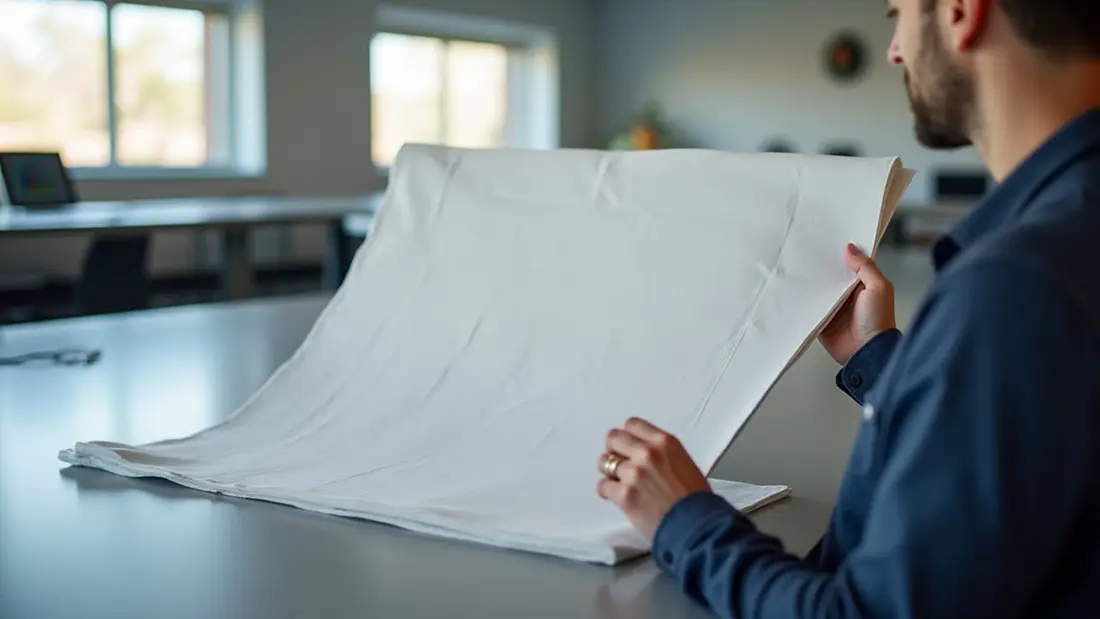
The most expensive part of an SEG display is the part nobody ever needs to replace. The extruded aluminum frame, the feet, the crossbars, the case — those outlive several graphics. What wears out is the fabric: the print you dragged through six trade shows, packed damp once, and finally ripped along the silicone strip while pulling it out of the groove at eleven at night in a half-struck booth. We print replacement SEG graphics at the shop on Lankershim for companies across the San Fernando Valley and greater Los Angeles, and most of the calls start the same way — somebody has a perfectly good frame in a storage closet and no idea what size to order for it.
That question has a specific answer, and getting it wrong is the single reason a replacement graphic fails. So start there.
Measure the frame, not the old graphic
SEG stands for silicone edge graphic. A thin silicone strip is sewn around the perimeter of a dye-sublimated fabric panel, and that strip pushes into a channel milled into the frame extrusion. The tension is what makes the print look flat and seamless — no grommets, no pole pockets, no visible hardware.
Because the fabric is pulled taut, the panel is cut smaller than the opening it fills. How much smaller depends on the extrusion. That means measuring your old graphic and ordering that size will get you a second graphic that is undersized by the same amount again, and it will sag or refuse to hold in the channel.
Measure the frame instead. We want the outside dimensions of the assembled frame, the inside dimensions of the opening, and the width of the groove. A photo of the extrusion end profile with a tape measure in the shot tells us more than any of those numbers alone. If you can, bring the frame — or one upright and one crossbar — into the shop. Ten minutes at the counter beats three emails.
If the frame came with a spec sheet or a model number printed on a sticker inside a case, send us that too. Our SEG replacement graphic starts at $165, with size and options set in the configurator, and the sizing is the thing worth being slow about before you commit.
Silicone gauge, and why not all strips fit all frames
Not every groove takes the same silicone. Common gauges run in the neighborhood of two to three millimeters, and a strip that is too thin will pop out of the channel under tension while one that is too thick will not seat at all without a fight. This is not something you can eyeball from a phone photo of the front of the display.
So: check what came out. Cut a short section from a corner of the dead graphic and bring it, or measure the strip thickness with calipers if you have them. If the old graphic is genuinely gone, the groove width measurement does the same job. Frames bought from different vendors over several years are rarely the same system, even inside one company's storage closet — label each frame once you have identified it and you will never do this again.
Single-sided, double-sided, backlit
Three fabrics do three different jobs, and the frame usually decides for you.
A single-sided graphic on a wall-mounted or booth-back frame is the common case. If your frame is freestanding and people walk behind it, you want a blockout liner — an opaque layer that stops the reverse image and any shadowed structure from ghosting through. Without it, a bright light behind the display turns your logo into a faint mirror of itself from the front.
Double-sided means two printed faces, and the two faces do not have to carry the same artwork. A display in an aisle sees traffic from both directions, and those directions are often two different audiences.
Backlit fabric is a separate material with different density, printed to look correct when a light box pushes light through it rather than bouncing off it. Artwork built for a front-lit panel will look washed out and thin in a light box, and the fix is at the file stage, not at print time. Tell us if the frame is illuminated. We ask, but if the frame is at your warehouse and you are ordering online, say so in the notes.
When the frame is gone too
Sometimes the honest answer is that the display has aged out, not just the print. Bent uprights, stripped feet, a case with no wheels left — at that point you are buying hardware, not a replacement graphic.
Our 3FT SEG fabric stand starts at $195 and is the frame-plus-fabric package: a narrow upright display that fits a table end, a lobby corner, or a booth where you need a clean vertical without a full back wall. Because it is a system, everything is dimensioned together and there is no groove to measure.
For an event wall — step-and-repeat, photo background, the full-width panel behind a stage or check-in table — a backdrop banner starts at $189.99 and gives you the large printed surface without the SEG frame in the equation.
And for the recurring problem SEG does not solve well — one person, one hand, a folding table, five minutes to set up — a black stand retractable banner starts at $62.50. Most companies that show at events regularly end up owning both: SEG for the wall that has to look seamless, retractables for the satellite pieces you deploy fast and hand off to whoever is working the table.
Colour across reprints is the real problem
Here is the thing people underestimate. A replacement graphic almost never hangs alone. It goes back into a booth next to a two-year-old panel, a printed table throw, and a set of brochures. If your brand blue drifts, the reprint is what everyone notices, because it is the one thing on the stand that is new.
Dye sublimation on fabric does not behave like ink on a vinyl banner or on paper. The same file, printed on the same day on two different substrates, will not give you two identical blues — fabric texture, weave and coating all move the result. If matching an existing piece matters, bring the existing piece in. A physical sample sitting next to a printed proof settles in one minute what a screenshot cannot settle at all. This is ordinary digital printing work, and matching is a normal part of it, but only if we know what we are matching before we run the job.
Also give us the brand values you actually use, not a colour picked off a website screenshot. A logo pulled from a social media profile is typically a few hundred pixels wide and will not survive being blown up to a seven-foot panel.
Files, folds and steaming
Send vector artwork with fonts outlined where you have it. Build to the finished panel size we confirm with you, add the bleed we specify for the silicone hem, and — this is the SEG-specific one — keep every piece of critical content well inside the edge. The outer margin of the panel wraps around the frame face and disappears into the channel. Type or a logo edge parked too close to the trim will be half-swallowed by aluminum.
When the graphic arrives, expect fold lines. SEG fabric ships folded, and that is normal, not a defect. Most creases fall out within a day of being installed under tension. If a stubborn one remains, a handheld steamer on a low setting at a distance, or a cool iron with a cloth between, will take it out. Do not put a hot iron directly on the print.
Store the fabric folded and dry, separately from the frame — not stuffed in the case around bare aluminum edges, which is how the silicone strip gets nicked. When you pull a graphic out of the channel, work along the strip with your fingers rather than yanking a corner. Almost every torn SEG we see was torn during a rushed strike-down.
If the display is part of a larger storefront or facility set — a sign band, a lobby wall, a directory, a window — that is our signage and front signs work, and it makes sense to plan the pieces together rather than one panel at a time.
Angels Print prints SEG replacement graphics, SEG fabric stands, backdrop banners and retractable banners at 8511 Lankershim Blvd in Sun Valley, for companies across the San Fernando Valley and greater Los Angeles. If you know your frame dimensions and your artwork is ready, pick your size and options and order online. If you are holding a frame you cannot identify, matching a panel that is already in your booth, or unsure whether it is backlit, call us at (818) 806-9006 or bring the frame and the old graphic to the shop — we will measure it with you before anything gets printed.