September 13, 2026
Front Signs in North Hollywood: Choosing the Panel, the Wall and the Mount
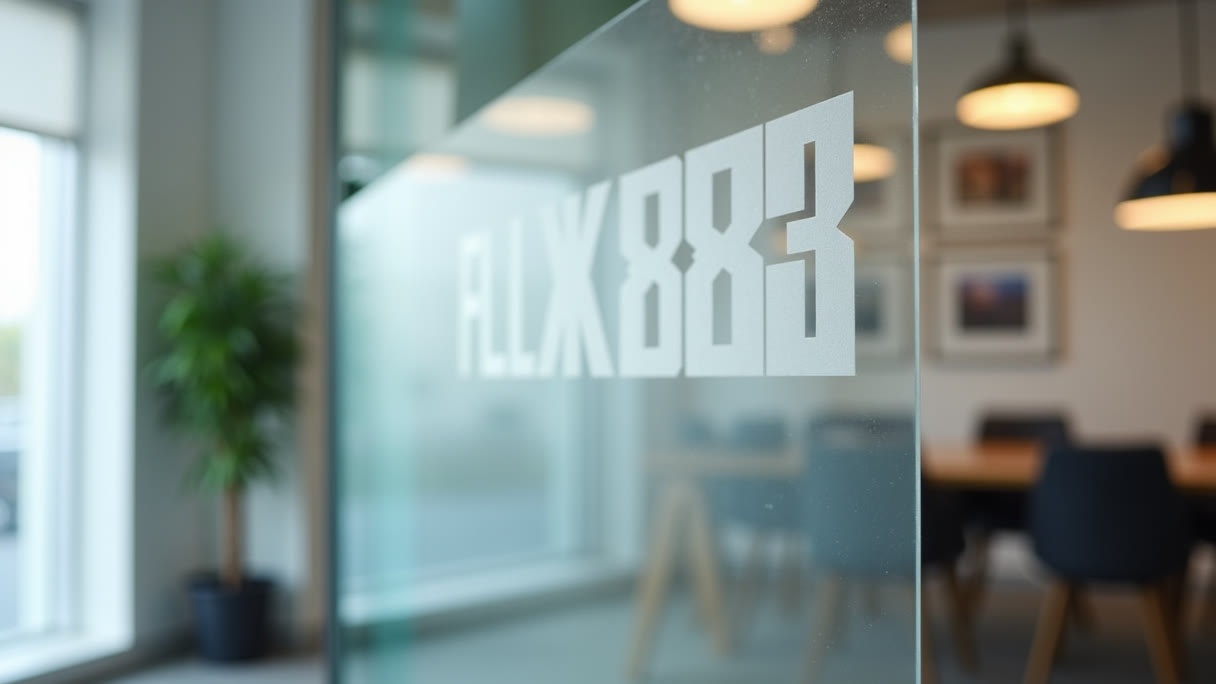
A front sign has one job that nothing else in your marketing does: it tells a person who is already outside your door that they have arrived. On Lankershim, Magnolia, Victory or Sherman Way, that person is usually in a car, in a lane of traffic, looking for a number on a building. They get a couple of seconds and one glance. Everything worth deciding about a storefront sign follows from that.
We make signage and front signs at the shop in Sun Valley, a few minutes up Lankershim from North Hollywood, and most of the work starts the same way — someone has a lease, a logo, a landlord and a blank stucco band above a window, and no idea which of those four things is going to be the constraint. This is what we go through before anything gets cut.
Start with letter height, not with the panel
The working rule for signage is roughly one inch of capital letter height for every ten feet of viewing distance, and a little more if the reader is moving. Stand where your customer actually is — the near lane, the far lane, the parking entrance two doors down — and pace it out. A storefront set back thirty feet behind sidewalk and parking needs letters around four inches minimum, and that is the floor for legibility, not the number that makes someone turn in.
Do that arithmetic first and the panel size stops being a guess. It also tells you, honestly, how much copy fits. A front sign holds your name, and sometimes one line describing what you do. It does not hold your hours, your three services, your Instagram handle and a QR code. Those belong on the door and the window, where the reader is standing still.
One detail specific to this stretch of the Valley: a lot of North Hollywood frontage sits at an angle to the traffic that matters. If cars mostly approach from one direction, your sign is being read edge-on for the last hundred feet. Wider letterforms and more space between them survive that far better than a tightly tracked logotype does.
Dibond is the default flat panel
For a flat sign on a wall, the material we reach for most is dibond aluminum, starting at $37.42. It is an aluminum composite — two thin aluminum skins bonded to a plastic core — and the reason it dominates exterior flat signage is that it stays flat. Plain sheet aluminum of the same weight oil-cans: it ripples in the sun and every ripple shows up as a warped reflection across your logo. Composite panel does not do that.
It is also light enough that the mounting hardware is ordinary rather than structural, it cuts to shape cleanly, and it takes print with hard, clean edges. For a name band above a window, a menu board on an exterior wall, a directory panel at the back of a lot, or a panel dropped into an existing frame where the old tenant's sign used to sit, it is usually the right answer without much debate.
What it is not: a substitute for individual cut letters. A panel reads as a panel. If your look depends on letters that appear to float on the wall with the stucco showing between them, that is a different fabrication, and it is worth saying so at the start rather than after we have printed something rectangular.
Standoffs do more than hold the sign up
An acrylic standoff sign starts at $37.50, and the standoffs — the small metal barrels at the corners — are doing two jobs. One is mechanical. The other is optical, and it is the reason this mount looks expensive.
Holding the panel off the wall by half an inch or so creates a shadow line under and around it. That shadow is what your eye reads as permanent and installed, versus a flat panel glued to a wall, which reads as temporary no matter how good the print is. It is the same trick a framed picture plays. It also keeps the panel off a surface that is rarely as flat as it looks — stucco, brick and tile bulkheads on older North Hollywood buildings are all uneven enough that a directly bonded panel will show every high spot.
The practical cost is holes. Standoffs need four drilled points in the panel and four anchors in the wall, and the anchor is the part that depends entirely on what the wall is made of. Drilling into stucco over wood framing, into a brick face, and into a glass storefront transom are three genuinely different installs. Know which one you have before you order, because the panel is easy to make and the wall is not.
Inside the door is a different object
Once you are through the entrance, the reading distance collapses to a few feet and everything changes. Letter height stops mattering and finish starts mattering, because people are close enough to see edges, thickness and how cleanly the thing is mounted.
That is where acrylic business signs do their work, from $46.76 — the panel behind a reception desk, a suite number by a door, a name plate in a shared lobby on Magnolia where four businesses list off one hallway. The material thickness and the shadow it throws are doing most of the visual work at that distance.
Worth separating out: ADA signage is its own category with its own rules. Tactile characters, grade 2 braille, specific mounting heights and non-glare finishes are requirements for things like restroom and permanent room identification, and a printed acrylic panel is not automatically any of that. If the sign has a code function, confirm the requirements that apply to your space before you order artwork — it is a different product, not a different print file.
The banner is the honest interim sign
Permanent signage takes time that a lease does not always give you. A vinyl banner from $67 is the standard bridge — you are open, the permanent sign is in process, and a banner across the frontage is what tells the street.
Make it a proper banner rather than a poster that got wet. Hemmed edges and grommets along all four sides, secured at every grommet and not just the corners, and tensioned so the face is flat. A banner tied at four corners only will beat itself against the building all winter and tear at the grommets. For a large span on an exposed frontage, plan for wind at the design stage — a sign that stays up is worth more than a sign that is one size bigger.
Banners also earn their keep after the permanent sign is up, for grand openings, seasonal work and sidewalk-facing promotions along the NoHo Arts District blocks where foot traffic is real.
Permits and the landlord
North Hollywood is inside the City of Los Angeles, so permanent exterior signage goes through the city rather than a separate city hall, and most permanent wall signs and any electrical sign are permitted work. Size limits, projection and illumination are tied to the zoning of your specific parcel, which means the answer for your neighbor's building is not necessarily the answer for yours.
The other gate is your lease. Commercial leases routinely reserve sign approval to the landlord, and older multi-tenant buildings often have an established sign band that every tenant is expected to fit inside. Getting a written OK on size and placement before artwork is cheaper than getting it after.
We print and fabricate the sign. We cannot pull your permit or clear your lease for you, so bring those questions to the city and your landlord early — and if you want to see how the pieces fit together for a local storefront, our North Hollywood signage page lays out the same options in one place.
Which wall you actually have
Check the sun before you commit to a design. A west-facing frontage on a Valley summer afternoon is a harsh environment, and it fades ink in a predictable order: reds and magentas go first, then yellows, while blacks, deep blues and greens hold on much longer. A logo built around a hot red will drift over a couple of summers in a way the same logo in dark blue will not. That is worth knowing at layout, not at replacement.
Look at what is around the sign too. Glare off a glass storefront, a shade tree that throws dapple across the panel half the day, an awning that eats the top four inches from the sidewalk angle — all of these decide placement more than the panel does. Stand where the customer stands, at the hour they come, before you pick the spot.
Files
Send vector artwork with fonts outlined, built at the final size, with bleed all round. Keep critical copy well inside the panel edge, and further inside on a standoff sign, since the mounting holes need clear space at the corners. Build in CMYK.
Resolution expectations are lower than print people assume for anything read from a traffic lane — a photo at 100 to 150 ppi at full size is fine when nobody is inspecting it from a foot away. Interior acrylic is the opposite: people will be close, so send the real file, not an export from a slide deck. And tell us the finished dimensions in inches, along with which wall it is going on and what that wall is made of.
Angels Print makes storefront panels, standoff signage, interior acrylic and banners at 8511 Lankershim Blvd in Sun Valley, for businesses across North Hollywood and the San Fernando Valley. If your artwork is ready, pick your size and order online. If you are still working out letter height, which panel suits your frontage, or how the thing attaches to the wall you have, call us at (818) 806-9006 or bring photos of the storefront into the shop and we will work it through with you first.