

August 25, 2026
Event Tickets in Los Angeles: Numbering, Stubs and What Actually Has to Be on the Ticket
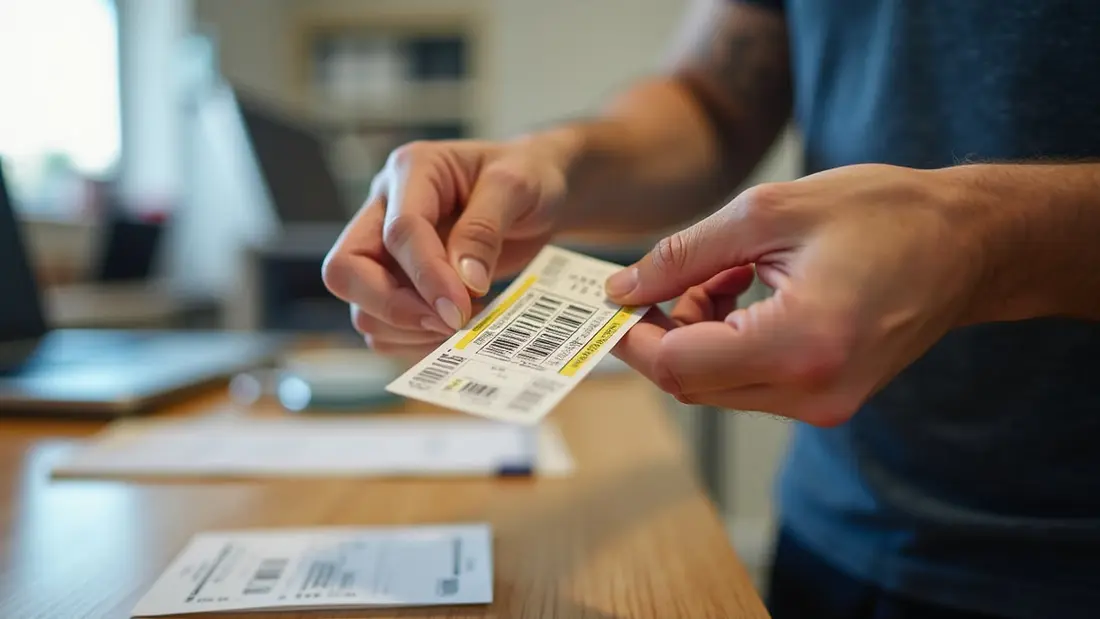
People searching for event tickets in Los Angeles usually get pushed toward a platform — sell online, scan a QR code at the door, take a percentage. That works, right up until you are running a fundraiser where half the room is buying from a table in the lobby, or a raffle where the whole point is that someone holds one half and the drum holds the other, or a school night where a parent hands cash to a student volunteer. Those events still run on paper, and the paper has to be right the first time, because you cannot reprint the door stock at 6 p.m. on a Saturday. We print tickets at our shop on Lankershim, and the questions we ask before a job goes on press are almost always the same five.
What has to be on the ticket, in what order
A ticket is not a flyer. It is read in about two seconds, in bad light, by someone holding a drink. The hierarchy that survives that: event name, then date, then time, then venue with the street address, then admission type, then price. Everything else — sponsor logos, dress code, no refunds, doors at 7 — sits at the bottom in small type and nobody will read it, which is fine, because its job is to exist rather than to be read.
Two things get left off constantly. The first is the year. "Saturday, October 3" is unambiguous until the ticket turns up in a drawer twelve months later during an audit or a dispute. The second is the street address; venues in Los Angeles share names, and "the Legion Hall" means four different buildings depending on which side of the 5 you grew up on. Put the full address on it even though everyone attending supposedly knows where it is.
Our event tickets start at $50.89, and the standard run of 50 works out to $1.02 a ticket. That per-piece number is the one to watch, because tickets are a product where the setup dominates the price at small quantities and almost vanishes at large ones. Doubling from 50 to 100 never doubles the cost.
Numbering is the whole point, and it is not automatic
If your ticket has no unique number on it, you have printed a coupon. Sequential numbering is what lets you reconcile the cash box against the door, tell a volunteer to sell block 201–300, void a batch that went missing, and run a raffle at all. It is also what makes duplication obvious: two people at the door holding number 0147 is a conversation you can have, while two people holding identical unnumbered tickets is not.
Numbering, perforation and tear-off stubs are not part of a default print run — say what you need when you place the order and we will tell you what it costs and whether the layout supports it. Practical points we raise most often: start at a number with the same digit count as the highest one you will reach, so 0001 rather than 1, otherwise your sorted list goes 1, 10, 100, 2. Order more numbers than you plan to sell — comps, press, the venue's own allocation and the ones a volunteer spills coffee on all come out of the same range. And if you are running tiers, use separate blocks or a prefix (GA-0001, VIP-0001) rather than trusting the door staff to remember that VIP is everything above 400.
The stub, and where the perforation goes
On a tear-off ticket, the stub is the part you keep — usually the numbered end that goes in the drum or the cash box, while the holder keeps the larger piece with the event details. Decide which half survives before we lay out the art, because it determines what gets printed where. If the stub is going in a raffle drum, it needs the number and a place to write a name and phone; if the stub is your door count, it only needs the number.
The perforation itself wants about a quarter inch of clear space on either side. Text, rules and background colors that run straight through a perf tear badly and look sloppy at the edge. Keep the design element you care about — the logo, the number — away from that line.
Size and stock, which set how it feels
The familiar carnival ticket is roughly 2 by 5.5 inches with a stub at one end. That shape is well understood by everybody who has ever run a door, and it fits a shirt pocket. Larger formats near a postcard size give you room for a seat map, a sponsor block or a full-bleed photo, and they read as an invitation rather than as admission — the right call for a gala or a preview night where the ticket doubles as the keepsake.
On weight: anything meant to be torn or handled all evening should be card stock, not text stock. Light paper curls in a pocket, tears at the wrong place instead of at the perforation, and goes soft in the hand of someone who has been holding it in a warm room for an hour. If people are going to write on the stub — and at a raffle they are — avoid a heavy gloss coating on that side, because pen skates on it and pencil does nothing. Uncoated or matte on the writing side, whatever you like on the other.
Making a ticket hard to fake without a security press
Nobody is counterfeiting a school dance ticket with an offset press. They are photographing one and printing it at Kinko's, and that is a much lower bar to defeat. Sequential numbers on a list you actually hold are the strongest defense, because a copy duplicates a number that is already spoken for. After that: print on both sides, since single-sided copies are easier to make; use a color that a consumer inkjet reproduces badly, deep solids and metallics being the usual offenders; put an ink stamp or a signature on the stub at the door; and if the event is genuinely worth faking, change the stock color per tier so a wrong ticket is visible from three feet away without anyone reading it.
Short runs, and why digital changed the math
Ticket runs are small — a few hundred, occasionally a few thousand — and small runs used to be punished by plate costs. Digital printing is why a 50-piece order is now a normal thing to sell rather than a favor. It also means variable data, so per-piece numbering does not require anyone to hand-stamp anything, and it means a second tier or a corrected date is a new file rather than a new setup. What digital does not do is beat offset on cost once you are past a few thousand identical pieces; if your run is genuinely large, tell us and we will price it both ways.
The pieces that go around the ticket
Most events that need tickets need three or four other printed things, and ordering them together saves a trip. For recognition at the podium — donors, sponsors, volunteers, competition placings — certificates run $74 for 50, about $1.48 each, and they are the one item people photograph and keep on a wall, so they are worth printing rather than running off in the office at 11 p.m.
For the merch table or the swag bag, circle and oval magnets are $130.63 for 100 — $1.31 each — and they outlive the event by years on somebody's fridge, which is more than a lanyard does. For save-the-dates, VIP invitations and the mailer that fills the room in the first place, die cut postcards start at $178.94 for 50, $3.58 each; the custom shape is the reason it does not go straight into the recycling with the rest of the mail. And if attendees need a program — schedule, floor plan, sponsor page — that is brochure printing territory rather than something to cram onto the back of a ticket.
When a ticket is the wrong product
If entry is free and you only want a head count, you do not need numbered tickets; you need a clicker and a sign. If the event is recurring and the same people attend every week, a punch card or a membership piece does more work than a fresh ticket run each time. And if you are selling online anyway and scanning at the door, print a small run of physical tickets only for the cases the scanner cannot handle — comps, walk-ups, sponsors, and the guest whose phone is at 2%. That run is usually a hundred pieces and it is the cheapest insurance at the event.
Angels Print prints event tickets, certificates, postcards, magnets and programs at 8511 Lankershim Blvd in Sun Valley, for fundraisers, schools, churches, venues and promoters across the San Fernando Valley and greater Los Angeles. If your artwork is ready, pick your size and quantity and order online. If you are still deciding where the perforation goes, what number to start at, or whether your run should be 100 or 500, call us at (818) 806-9006 or come by the shop with your event details and we will work it out at the counter.