

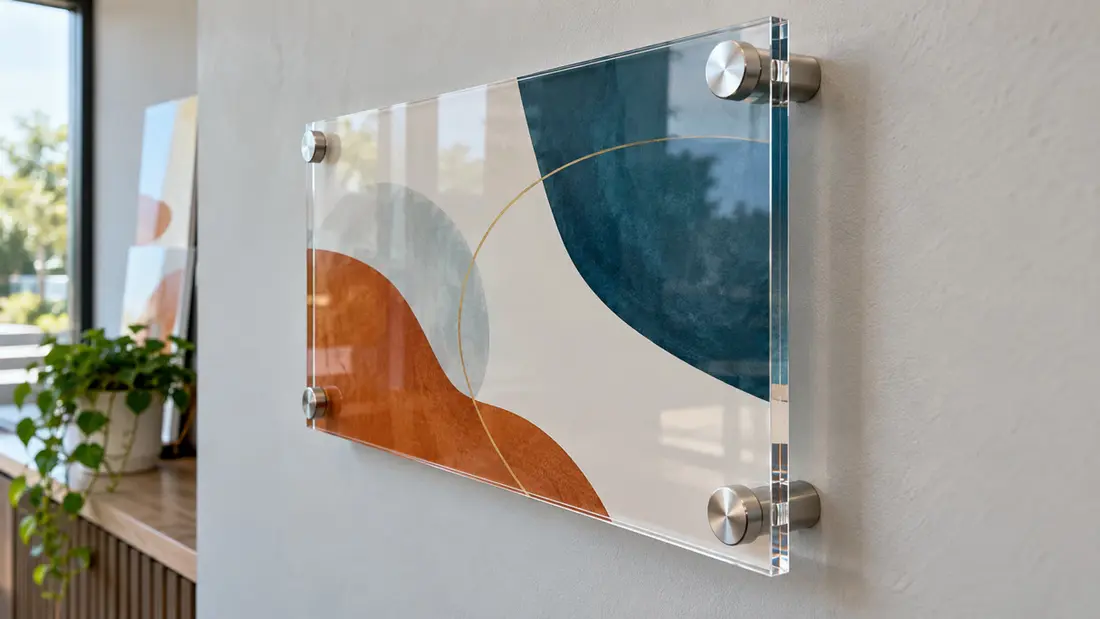
Learning how to hang acrylic signs starts with matching the mount to the panel and wall. Confirm the holes before ordering. For standoff mounting, your installer secures the hardware to suitable wall fixings, then attaches the prepared panel according to the hardware instructions. Panel preparation, hardware dimensions and wall clearance need to work together.
The order needs those decisions. A no-hole panel isn't automatically ready for adhesive mounting, and a corner-hole selection doesn't specify wall anchors. At Angels Print, the configuration establishes your selected options. Installation still depends on the actual wall.
How to hang acrylic signs: which mount should you order?
Start with the Acrylic Standoff Sign, from $37.50, for an exposed standoff mount. Rectangular-panel hole options include four corners, top/bottom, left/right and custom layouts. Circular panels have separate choices, including four standoffs. Available combinations depend on the shape.
Standoffs hold acrylic away from the wall, leaving visible hardware on the face. Placement affects the design. The catalogue lists silver, gold, black and white hardware styles, with size labels of 0.5, 0.75 and 1 inch. Confirm what that size measures before calculating projection.
Considering a different attachment method? Ask before you order. This product has no-hole selections, but those don't establish compatibility with tape, adhesive, clips or concealed mounts. We need to confirm your proposed approach before comparing it with standoffs. Don't assume any hanging kit will fit.
What does your wall allow?
Start with the wall construction. Drywall over a hollow cavity needs a different fixing approach from a location with suitable backing. Brick and concrete require fixings selected for those substrates. A photo can show the location, but it can't establish what's behind the surface.
Send a straight-on photo of the whole sign area, a close view of the texture and a usable-width measurement. Flag surfaces you cannot drill. Tile or glass also needs attention before production; your installer should verify fixing locations and check for concealed services before drilling.
Uneven walls need assessment too. Standoffs won't automatically correct every bump or change in level. Have the installer check the mounting points so tightening the hardware won't bend the acrylic.
Where should the holes go?
A layout name is only a starting point. 'Four corners' doesn't specify hole diameter or the distance from each edge to the hole center. Confirm both with us before production, matching them to the intended hardware. Existing wall holes may not match.
For replacement signs, supply the existing hole-center spacing in both directions, panel orientation and details of any hardware you'll reuse. Measure from center to center. Measuring between cap edges gives a different dimension; if accurate measurement is difficult, have the installer record it before ordering.
Keep lettering clear of the entire visible cap, not just the drilled opening. Caps can cover a logo. With custom shapes, the outline may leave less material around a mounting point, so ask us to confirm the preparation.
How much clearance will the installed sign need?
Check the gap behind the acrylic separately from the total wall-to-hardware projection. These are different measurements. Panel thickness and the hardware assembly affect finished projection; a standoff size label alone doesn't establish it.
Check nearby door swings and anything else that could strike the panel. Leave access to the caps. Give your installer counter or trim dimensions where relevant, and confirm the mounting position before using the finished panel to mark the wall.
Clear acrylic leaves the wall visible through unprinted areas. Old holes may still show. Patch marks can remain visible too, and moving the new mounting holes slightly won't necessarily conceal the old ones.
Which panel options affect mounting and cost?
Both featured products list 1/8-inch clear acrylic and 1/4-inch clear, white or black acrylic. Thickness affects weight and hardware fit. Larger panels also change support demands, so have the mounting plan reviewed before carrying a small sign's arrangement over to a larger one.
Listed sizes include 12 × 9, 24 × 18 and 6 × 6 inches, subject to shape, plus custom sizing. Custom-size fields allow widths from 1 to 48 inches and heights from 1 to 96 inches. Those are ordering limits. They don't establish approved mounting arrangements for every dimension.
Acrylic Business Signs, from $46.76, also offer standoff styles and shape-dependent layouts. Supplying your own hardware? Confirm the preparation first. Selecting 'No' for standoff style doesn't establish what alternative mounting preparation is supplied.
Size, material thickness, quantity and mounting selections can affect price. Acrylic Standoff Sign lists quantities from 1 through 10; Acrylic Business Signs lists 1 through 15. Check available combinations in the configurator. The final price appears at checkout, and you'll also need to confirm supplied hardware and any wall fixings your installer must provide.
What should your artwork and installer notes include?
Follow the selected product's listed file types, size, bleed and safe-area requirements. A print-ready PDF can be useful. Uploading or previewing it doesn't confirm production readiness, though. If mounting clearances aren't specified, ask before finalizing the design instead of inventing a corner margin.
Request a digital proof. Ask how agreed hole positions and hardware clearance will be documented, then check the artwork against those details. Production begins after your approval, so resolve mounting and design mismatches first. Our acrylic business sign ordering guide covers broader product choices.
Give your installer the confirmed finished dimensions, material thickness, mounting layout and hardware specifications. Mark the front and top. Include the intended wall position; for multiple signs, match each panel to its location so similar-looking pieces don't get swapped.
Check the delivered panel before attachment. Your installer should compare it with the agreed layout and follow the hardware instructions for assembly and tightening. Excessive clamping pressure can crack acrylic. Don't force misaligned holes onto fixings or treat drilling the finished panel as a routine adjustment.
Order your Acrylic Standoff Sign online once mounting preparation is confirmed. Send intended dimensions, wall photos and existing hardware measurements to hello@angelsprint.com before ordering so we can help confirm preparation. You can also call (818) 806-9006 or visit Angels Print at 8511 Lankershim Blvd, Sun Valley, CA.
Frequently asked questions
How do you hang an acrylic sign with standoffs?
Confirm panel holes and hardware dimensions first. Your installer selects wall fixings for the substrate, positions the standoff bases and attaches the panel following the hardware instructions. Check alignment before tightening. Avoid excessive clamping pressure on the acrylic.
Can you hang an acrylic sign without drilling holes?
No-hole panel options are listed for Acrylic Standoff Sign, but they don't confirm compatibility with adhesive or another mounting system. Ask Angels Print about your proposed method and panel. Wall drilling is a separate question. Tell your installer if it's prohibited.
Do acrylic signs come with mounting holes and hardware?
It depends on the configuration. Both featured products offer mounting selections, but the product name alone doesn't establish included holes, standoffs or suitable wall anchors. Confirm panel preparation and supplied hardware for your selected options before ordering.
How far from the wall does a standoff sign sit?
The selected hardware assembly determines the gap. Request dimensions before planning clearance. Confirm the space behind the panel separately from total projection to the front of the caps; listed standoff sizes alone don't establish either measurement.