

August 30, 2026
Magnetic Postcards in Los Angeles: Mailing, Hold Strength and What Ends Up on the Fridge
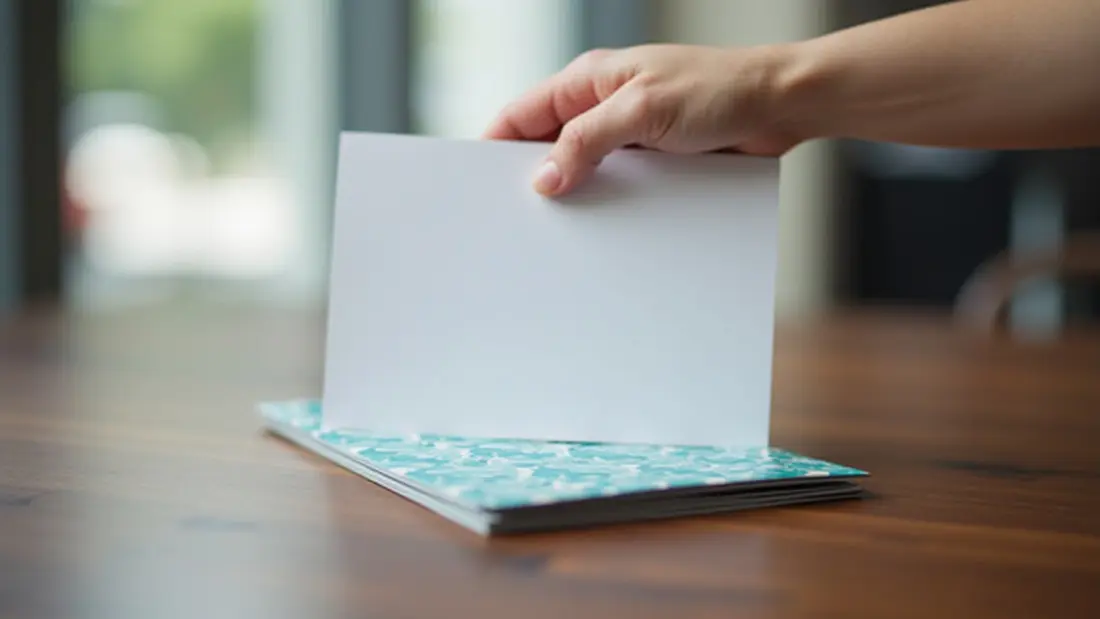
A paper postcard has a lifespan measured in the walk from the mailbox to the kitchen trash. A magnetic postcard is trying to do something different: get itself onto a fridge door and stay there for two or three years, so that when the water heater fails at eleven at night the number is already in the room. That is the entire value proposition, and it means the piece has to win twice — once at the mail sort, and once at the fridge. We print these at the shop on Lankershim for plumbers, HVAC crews, dentists, property managers and real estate agents across the Valley, and the jobs that disappoint are almost always the ones where somebody chose thickness, shape or mailing method by assumption.
What a magnetic postcard actually is
It is not a paper card with a magnet glued to the back. It is a flexible magnetic sheet with a printable coated face bonded to it, printed full bleed and cut to size. The whole piece is one object, so it will not delaminate in a warm mailbox, and there is no paper layer to soften, curl or wick moisture. It bends — you can flex it and it returns flat — but it does not fold, and that single mechanical fact drives most of the decisions below.
Our magnetic postcards start at $135.83, with a default run of 100 pieces at $1.36 each. Compare that per-piece figure against the retention, not against a paper postcard. A paper mailer at fifteen cents that gets binned unread costs fifteen cents for nothing. A magnet at a dollar and change that sits on a fridge for thirty months is buying you thirty months of shelf space in someone's kitchen, which is the only advertising space in the house that nobody scrolls past.
Answer the mailing question before you print anything
This is the decision that changes the artwork, the size and sometimes the whole product, and it is the one people leave until the boxes are already stacked in the office.
Postal automation equipment is built around pieces that can flex and bend through rollers. A magnet is stiffer than card stock and behaves differently in a sorter, so how a magnetic piece gets handled and what it costs to send is not automatically the same as a paper postcard of identical dimensions. There are generally three routes: send it bare as a self-mailer, send it inside an envelope, or skip the mail entirely and use it as a leave-behind — handed over at the counter, dropped in the bag with a delivery, left with the invoice after a service call.
We are not going to quote you postal rules, because they change and because the answer depends on your exact size, weight and mailing class. Take a printed sample or the exact specs to the post office you will actually mail from and get the answer at the counter before you commit to a run. What you must not do is design a full-bleed self-mailer with an address panel, print a thousand of them, and then discover you are mailing them inside envelopes anyway — at which point the address panel is wasted real estate and the piece is a size you would never have chosen.
If the plan turns out to be an envelope, the economics change in your favour in one way: you now have room to include something else. A magnet plus a folded piece from our brochure printing service is a stronger envelope than either alone — the brochure makes the argument, the magnet stays behind after the brochure is recycled.
Thickness, hold, and the stainless steel problem
Magnetic sheet is specified in mils — thousandths of an inch. Thinner sheet is cheaper and lighter to mail, and it is fine for a piece that only has to hold itself up. Thicker sheet has real grip: it will hold a school calendar or a stack of takeout menus against the door without creeping downward, and it lies dead flat instead of taking a lazy curl at the corners.
The way to choose is to describe the job rather than pick a number. A magnet that only carries your own printed face can be thinner. A magnet that is meant to be useful — pinning the trash pickup schedule, holding a kid's drawing, clipping the emergency contact list — needs to actually hold, because the first time it slides down the door with paper under it, it comes off the fridge for good. Tell us what it has to carry and we will spec the sheet to it.
Then there is the failure mode nobody plans for: a large share of modern refrigerator fronts are stainless steel, and much of that stainless is not magnetic at all. Your magnet will not stick to it. This is not a print problem and there is nothing we can do about it in the file — it is a targeting reality. In newer builds and remodeled kitchens, expect a meaningful portion of your list to have no fridge door available, and expect the magnet to migrate to a dishwasher panel, a metal filing cabinet, a range hood or a toolbox instead. Design so the piece still reads at arm's length in a garage, not just at eye level in a kitchen.
Put permanent information on a permanent object
The most common waste we see is a dated offer printed on a three-year object. Twenty percent off through the end of March, on a magnet that will be on the fridge in 2029. The moment the date passes, the piece reads as stale and gets thrown out, and you have paid magnet money for postcard retention.
Print what stays true. The business name, what you do in plain words, the phone number, the service area. Then earn the door space with something genuinely useful: a small calendar, a conversion chart, local emergency and utility numbers, a trash and recycling schedule, a measurement guide. Anything a household would otherwise write on a scrap of paper and stick to the fridge is a reason for your magnet to survive a spring clean.
One layout rule: the phone number is read from across the room by someone who is already annoyed. Make it the largest element after the logo, set it in dark ink on a light field, and give it space. A phone number reversed out of a photograph at nine points is decoration, not contact information.
Shape, and the alternatives worth pricing
Rectangles are efficient and cheap. Shape is what gets noticed. Our circle & oval magnets start at $130.63, with a default run of 100 at $1.31 each — a round or oval piece reads as an object rather than as mail, and it sits differently on a crowded door.
If the shape itself is the message — the outline of a house, a tooth, a truck, a slice of pizza — that is a die line, and it is worth seeing what the same idea costs in paper first. Die cut postcards start at $178.94, with a default run of 50 at $3.58 each. They are the right call when the piece is a one-time announcement in a striking shape and does not need to live on a fridge. Keep any die outline chunky on magnetic sheet — deep interior notches and fine points are fragile in a flexible substrate and will be the first thing to tear.
And if what you actually want is a recognition piece rather than a mailer — an employee of the month, a course completion, a donor acknowledgement — a magnet is the wrong object. Certificates start at $74, with a default run of 50 at $1.48 each. Nobody frames a magnet.
Building the file
Standard prep, with two magnet-specific notes. Set the artwork at final size with an eighth of an inch of bleed all round, keep text and logos at least an eighth of an inch inside the trim, build in CMYK at 300 dpi at final size or supply vector with fonts outlined, and avoid thin frames parallel to the cut — they will look centred on some pieces and off on others.
The first note is surface. The printable face on magnetic stock is a coated white layer, not the uncoated paper you may have proofed on, so ink sits on top rather than soaking in. Saturated colours hold up well; very light tints and delicate gradients show more difference from a paper proof than you expect. Short runs go through our digital printing process, which keeps colour consistent piece to piece within a run, but ask for a printed sample before a large order if the brand colour has to match something already in the field.
The second is the back. A magnetic postcard's back is a magnet — it does not take ink. Everything you want to say goes on one side. If your design assumed a two-sided card, it needs rebuilding, and that is a much better discovery to make at the file stage than at the box stage.
The Los Angeles part
Two local realities. The first is heat. A box of magnets left in a trunk or a storage unit through a Valley summer, stacked under weight or stored on edge, will take a set — a curl that does not fully relax when you lay the piece on a door. Store the cartons flat, indoors, out of direct sun, and do not stand them upright against a wall for three months.
The second is turnover. Large parts of the Valley are renters, and renters move — but unlike a yard sign or a door hanger, a magnet moves with the household. A plumber's magnet that goes from an apartment in North Hollywood to a house in Sylmar is still working, and it is now working in a new ZIP code you never paid to mail. That is the argument for spending magnet money on a piece worth taking down, packing and putting back up.
Angels Print prints magnetic postcards, circle and oval magnets, die cut postcards and certificates at our shop at 8511 Lankershim Blvd in Sun Valley, for contractors, clinics, agents and service businesses across the San Fernando Valley and greater Los Angeles. If your artwork is ready and you know how the piece is going out, pick your size and quantity and order online. If you are still deciding between mailing bare and mailing in an envelope, or how thick the sheet has to be for what you want it to hold, call us at (818) 806-9006 or bring your file to the shop and we will work it out before you pay for a run.