

September 4, 2026
Updated
Step and Repeat Banners in Los Angeles: Logo Size, Glare and the Backdrop That Actually Photographs
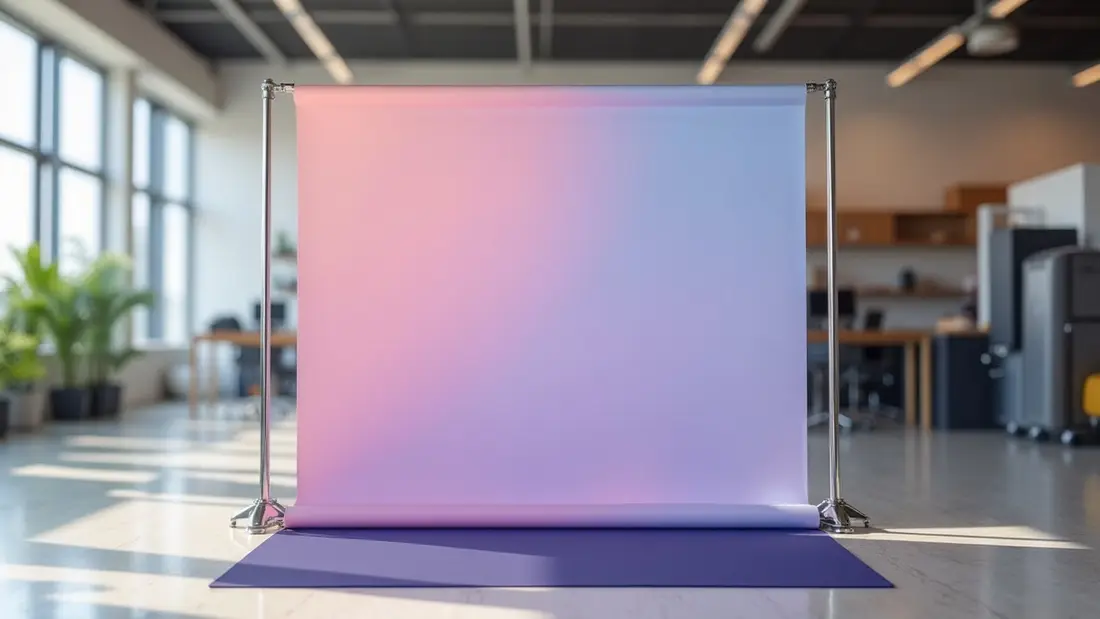
A step and repeat banner is not a decoration. It is a piece of photographic equipment. Every decision you make about it — logo size, spacing, colour, finish, how it is hung — is really a decision about what a phone camera with the flash on will record from twelve feet away at a downward angle. We print these at the shop on Lankershim for premieres, launches, galas, church events, quinceañeras, real estate open houses, conferences and corporate parties across the San Fernando Valley and greater Los Angeles, and the ones that disappoint the client almost never disappoint because of the printing. They disappoint because the logo was too small to read once a person stood in front of it, or because the flash bounced off the vinyl and blew a white hole through the middle of every photo.
The only test that matters
Before you approve artwork, do this: put the proof on a screen, stand back until the screen is roughly the size of a business card at arm's length, and see if you can still read the logo. That is approximately what your logo looks like in a photo that has been posted to a feed and scrolled past. If you cannot read it, no amount of extra logos on the wall will fix it — you will just have more unreadable logos.
The second test is a body. A person is about 20 to 26 inches wide across the shoulders and stands dead centre. Whatever is in the middle column of your backdrop is gone the moment somebody poses. Two people, and the middle third is gone. The logos that get photographed are the ones beside the head and above the shoulders — roughly the band between four and a half and seven feet off the floor. Design for that band and treat the bottom two feet as decoration that mostly ends up behind legs.
Logo size and the offset grid
The most common mistake is treating the backdrop like wallpaper: a small logo repeated forty times because repetition feels like value. It reads as texture, not as a brand. Fewer, larger logos win every time. As a starting point, make a single logo repeat somewhere between 8 and 14 inches wide on an 8-foot-wide backdrop, and let the spacing between repeats be roughly half the logo width so the eye reads separate marks instead of a pattern.
Offset the rows. If every logo sits on a strict square grid, the moment a person stands in front of it they cover a whole column and the composition looks broken. Stagger every other row by half a step — the same logic as brickwork — and a body blocking one repeat never blocks the ones directly above and below it. Some shops rotate the whole grid 20 to 45 degrees for the same reason; it works, it photographs well, and it costs nothing extra to lay out. Just check that the rotated logos are still level enough at the edges that the crop does not look accidental.
Contrast is the last piece. A white logo on a light grey field looks tasteful in the file and vanishes under a flash. Keep real separation between the logo and the background — and if your brand colour is a mid-tone, print the logo in it against a much darker or much lighter field rather than against a tint of itself.
Glare is a material decision, not a lighting problem
Almost every ruined step and repeat photo in Los Angeles has the same cause: a glossy surface, a direct flash, and a hotspot the size of a dinner plate. You cannot fix it at the event. You fix it when you order.
Ask for a matte finish. On vinyl that means a matte laminate or a matte-face material; on fabric it is inherent. Matte scatters the flash instead of returning it to the lens, which is the entire reason fabric backdrops took over red carpets. If you are printing on vinyl anyway — because of budget, because it is going outdoors, because you want the stiffness — matte is not an upgrade to consider, it is the default you should insist on.
Our step and repeat banner starts at $209, with the size and finish options chosen in the configurator. That is the purpose-built version: the print sized for a standing backdrop, with the edge treatment and hanging hardware that lets it go up against a wall or on a frame.
Fabric or vinyl, and what you are really buying
Fabric is the better photograph and the better traveller. It packs into a bag, it does not hold a crease the way vinyl holds a fold line, and it never glares. Vinyl is heavier, stiffer, cheaper per square foot, and it tolerates being outdoors and being handled roughly. If your backdrop is going up once in a ballroom and then living in a closet until next year, fabric is worth it. If it is going to a parking lot in July and getting zip-tied to a fence, vinyl is the sensible choice.
If you want the fabric route with the frame included, the 3FT SEG fabric stand starts at $195. SEG means silicone edge graphic — a thin silicone strip is sewn into the perimeter of the print and pushes into a channel around the frame, so the fabric pulls drum-tight with no visible hardware and no wrinkles at the edge. It is the cleanest-looking option we make, and the graphic can be swapped on the same frame later, which matters if you run the same event annually with a different sponsor list.
For a plain photo wall without the logo grid — a solid colour, a scene, a single large mark — the backdrop banner starts at $189.99. Same physics, fewer decisions.
The stand is half the purchase
A step and repeat that sags, leans or shows a wrinkled seam behind the guest of honour is a failed step and repeat, and the print is rarely at fault. Whatever holds it up needs to be stable on a carpeted ballroom floor and on a sidewalk, and it needs to go up without a ladder.
There is also a smaller format worth knowing about. A black stand retractable banner starts at $62.50, and while it is not a photo wall, two of them flanking a check-in table do a real job at a small event: the branding is in frame for every arrival photo, they set up in under a minute, and they roll back into their own cases at the end of the night. For a launch on a tight budget, a pair of retractables plus a good fabric backdrop covers more ground than one very large banner.
Plan the room, not just the banner
Give the photographer eight to twelve feet of clear floor in front of the backdrop. Any closer and a phone flash falls off across the width of the wall, so one side of the photo is bright and the other is muddy. Any tighter than about six feet and a wide phone lens starts to bend the logos at the edges.
Leave the backdrop free-standing away from the wall if you can — even a foot of gap kills the shadow that otherwise draws a hard line around every person's silhouette. And do not put the step and repeat directly under a downlight; overhead light rakes across the surface, finds every ripple, and puts shadows in the eye sockets of everyone who stands there.
Sponsor grids, and the argument you will have
If the backdrop carries multiple sponsor logos, decide the hierarchy before you send us artwork, not after the proof. Logos arrive at wildly different aspect ratios — a wide wordmark and a square badge at the same pixel width look nothing alike on a wall — so normalise by visual area, not by width. Alternate the marks across the offset grid so no single sponsor lands only in the dead centre column that bodies cover, and be honest that the top row and the eye-level row are the valuable real estate.
On files: send vector artwork with fonts outlined wherever it exists. A logo pulled from a social profile at 600 pixels is fine on a business card and turns to mush at 12 inches on a wall, and it is far cheaper to rebuild it now than to see it in the photos. Build in CMYK, keep a couple of inches of bleed on a piece this size, and hold nothing important in the outer margin — the perimeter disappears into a pole pocket, a hem or a SEG channel depending on how it is finished. This is standard digital printing work, and if the event also needs directional signs, a check-in sign or a front sign for the venue, that falls under signage and front signs.
Angels Print prints step and repeat banners, fabric backdrops and retractable banners at 8511 Lankershim Blvd in Sun Valley, for events across the San Fernando Valley and greater Los Angeles; plain vinyl, mesh and fabric event banners are covered on our banner printing in North Hollywood page. If your logo grid is laid out and you know your size, pick your options and order online. If you are still deciding between vinyl and fabric, working out how large the repeat should be for your room, or juggling a sponsor list that has changed three times this week, call us at (818) 806-9006 or bring the artwork to the shop and we will size it against a printed sample before anything goes on the wall.